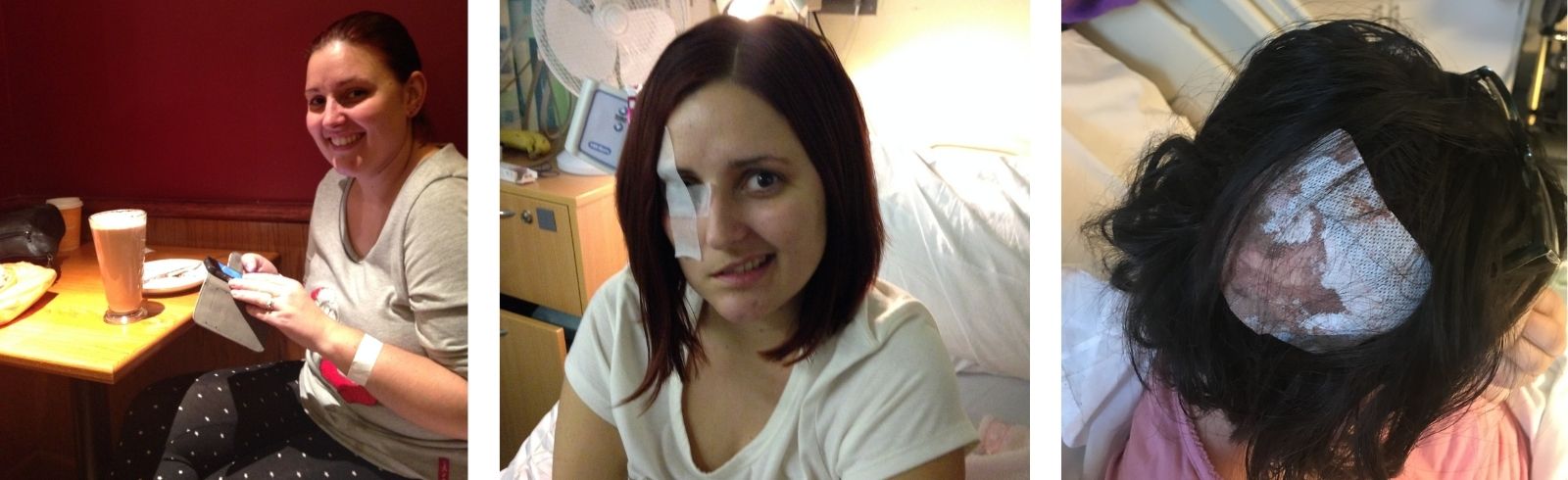
Amy Stones, 38, from Kirkby-in-Ashfield in Nottinghamshire, was diagnosed with a brain tumour in 2014 following a routine eye test which discovered she had vision problems. The results from an MRI scan diagnosed her with an acoustic neuroma pressing on her optic nerve. Amy underwent a nine-hour operation which left her with facial palsy and, later, complications from hydrocephalus requiring a shunt. Now more than 10 years on, she is taking part in Brain Tumour Research’s 88 Squats a Day in July challenge to help raise funds and awareness for the disease.

Amy tells her story…
In 2014, everything in life felt normal. I worked as an administrator for a building maintenance company, loved playing netball, and enjoyed spending time with friends and family. I had recently married my husband Adam, and we were thinking about starting a family.
When I went to Specsavers in Sutton-in-Ashfield for my regular eye test, I realised I couldn’t see properly out of one eye.
The optician referred me to my GP, who sent me for an MRI at Kingsmill Hospital. I didn’t think much of it but just half an hour after the scan, I received a call telling me to go straight to A&E at Queen’s Medical Centre in Nottingham.
There, they told me I had a brain tumour. I couldn’t help but laugh because I felt fine and didn’t believe them at first. I remember sitting in a family room at the hospital with Adam and my mum while they explained everything and it was so surreal. The doctors said it was an acoustic neuroma, a slow-growing, non-cancerous tumour that had been pressing on my optic nerve and causing pressure in my brain.
I had surgery just a week later which took nine hours. They were able to remove most of the tumour, but some of it had to be left behind because of where it was.
Unfortunately, the operation left me with facial palsy on the right side of my face. I couldn’t blink properly, and smiling was difficult.

Later, I became seriously unwell again. I was told I had hydrocephalus, a build-up of fluid on the brain, and I needed to have a shunt fitted to relieve the pressure. I still live with that shunt today.
Recovery was tough. I struggled to eat and talk, I couldn’t work or drive, and I lost a lot of my independence. It took years for me to regain my confidence and driving again was a huge milestone. I also attended Headway Nottingham for rehabilitation, and they were an incredible lifeline during that time. It helped me rebuild my confidence, meet others who understood what I was going through, and feel like myself again. The most important moment came when I was told I could still have children. That was the first question I asked after surgery and I went on to have my blessed little boy, Lucas, who is now five.
This journey has changed my perspective on life. I now know how common brain tumours are and how underfunded research into them is.
Before my diagnosis, I had never heard of an acoustic neuroma. Now I want to raise awareness and help fund the research that could lead to a cure.
That’s why I take part in fundraising every year. In 2024, I completed a running challenge and raised more than £500 with support from friends. This July, I’m doing the 88 Squats a Day challenge. Next year is a mystery but I’m sure something will come up.
If sharing my story helps others feel less alone or raises vital funds for research, then I’ll keep doing what I can to support this wonderful charity and important cause.

Amy Stones
July 2025
One in three people in the UK knows someone affected by a brain tumour. This disease is indiscriminate; it can affect anyone at any age. What’s more, brain tumours continue to kill more children and adults under the age of 40 than any other cancer yet, to date, just 1% of the national spend on cancer research has been allocated to this devastating disease since records began in 2002.
Brain Tumour Research is determined to change this.
If you have been inspired by Amy’s story, you may like to make a donation via www.braintumourresearch.org/donate or leave a gift in your will via www.braintumourresearch.org/legacy
Together we will find a cure.
